Daylight Savings time falls on Sunday, March 8; actually at 2 a.m.. Clocks should be moved forward one hour, changing the time from 2 a.m. to 3 a.m. but most people just do it before they go to bed. The saying goes, “Spring Forward, Fall Back. Come Monday morning after the time change, there are a lot of people dragging themselves to wake up for school or work each year.
As much of the nation prepares to “spring forward,” the American Heart Association cites scientific research that indicates the spring time change may negatively impact your heart and brain health
The American Heart Association offers a few tips to get ahead of the time change:
- Do start now to get outside and get as much natural light as possible each day. This can help adjust your body rhythm for the change to come.
- Do begin winding down a little earlier in the evenings ahead. While you can never make up lost sleep, going into the time change well-rested can help.
- Don’t compensate with extra caffeine. It may feel like an extra coffee or two can help you through the mid-day slump, but too much caffeine is not heart-healthy.
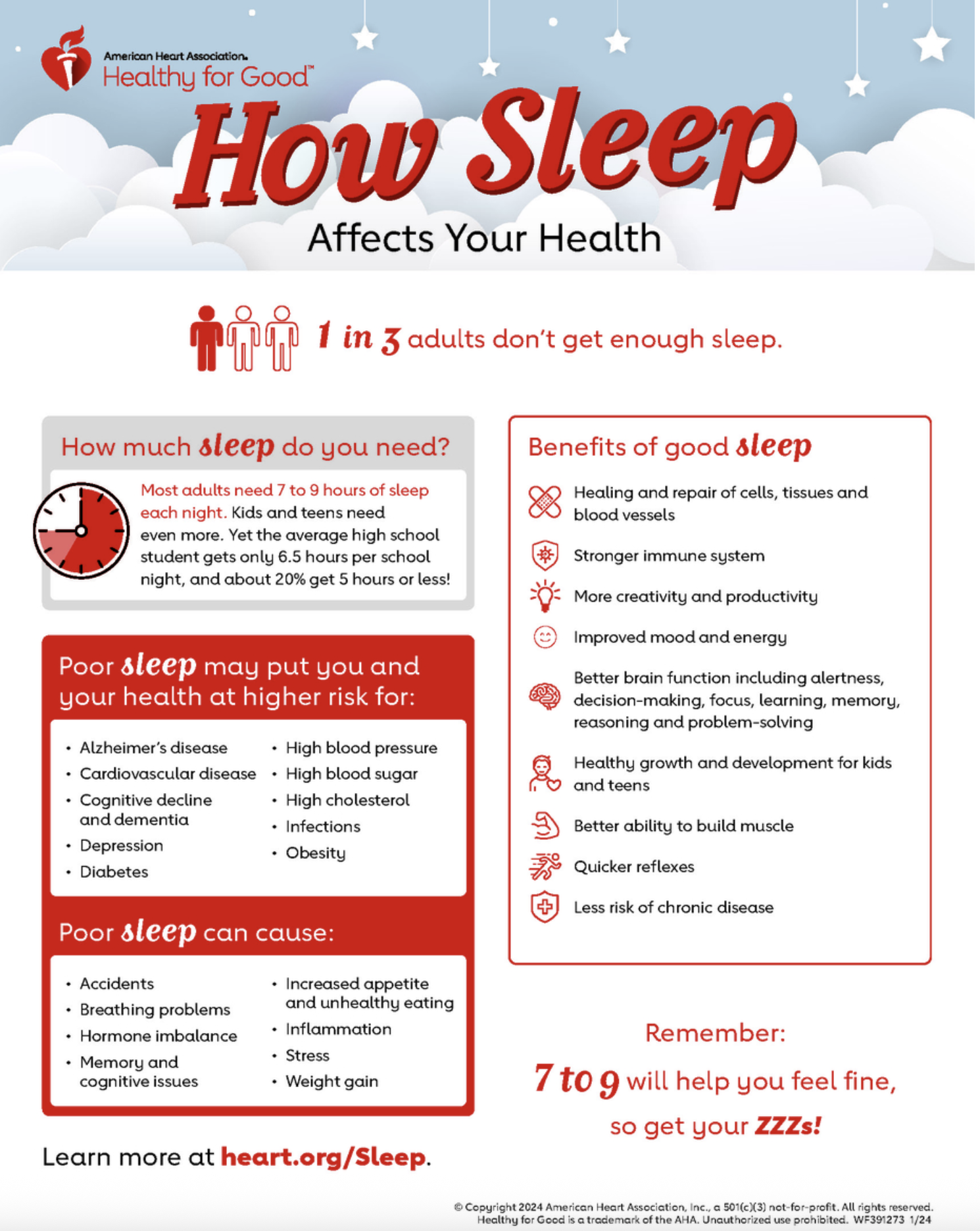
Most adults need 7-9 hours of sleep each night. Children require more: 10-16 hours for ages 5 and younger, including naps; 9-12 hours for ages 6-12; and 8-10 hours for ages 13-18. Adequate sleep promotes healing, improves brain function and reduces the risk for chronic diseases.
Several recent studies supplied by the American Heart Association, highlight how sleep impacts your heart health:
- A study published in the Journal of the American Heart Association found that variations in sleep duration of more than two hours a night within the same week were tied to developing hardened arteries, known as atherosclerosis.
- A study published in the journal Hypertension found that the link between excess weight and higher blood pressure in adolescents was stronger among those who also had irregular sleep patterns. Irregular sleep patterns contributed to elevated blood pressure in teens who had more visceral fat, which is excess weight in the belly/abdominal area.
- A study published in the Journal of the American Heart Association found about 1 in 4 women may develop irregular heart rhythms, known as atrial fibrillation, after menopause, with stressful life events and poor sleep being leading contributing factors.
- An abstract presented at the American Heart Association’s Scientific Sessions 2023 found that more than one-third of children in the U.S. did not get the amount of sleep recommended by the American Heart Association.
The Heart Association’s Life’s Essential 8 recommended ideal level of sleep is:
- 7-9 hours daily for adults;
- 8-10 hours daily for ages 13-18 years;
- 9-12 hours daily for ages 6-12 years; and
- 10-16 hours daily for ages 5 and younger.
Here are some tips to keep you sleeping patterns in tact:
- Don’t hit snooze: Sleeping past your alarm can make you groggier in the morning. Try putting your alarm clock across the room so you must physically get out of bed to turn it off.
- Prioritize exposure to natural light: Maximize exposure to natural light during the day to regulate your body’s internal clock and prepare for a restful night. Try going for a walk when you wake up in the mornings to promote physical activity while getting natural sunlight.
- Eat a healthy, balanced diet: Enjoy a heart-healthy diet with plenty of fiber-rich vegetables, fruits, legumes and whole grains and balance your calories throughout the day. When you get more calories late at night, sleep may be less peaceful.
- Watch what you drink: Drinking too many sugary, caffeinated or alcoholic beverages may lead to more disruptions during the night.
- Limit afternoon naps: Avoid taking long naps during the day because they can disrupt your sleep patterns and make it harder to achieve restful sleep at night. Instead, focus on maintaining consistent sleep patterns to support good overall sleep quality.
- Limit technology use in the evening: The blue light of most electronic devices can interfere with your circadian rhythm and melatonin production. Create a productive sleep environment by keeping electronic devices out of the bedroom. Aim to disconnect from screens at least one hour before bedtime to reduce exposure to blue light and promote better sleep quality.
- Create a relaxing bedtime routine: Engage in calming activities before bed, such as reading a book, journaling, taking a warm bath, or practicing relaxation exercises like deep breathing or meditation. Relaxing activities can help ease into a restful night’s sleep.
“Making small changes in your daily habits can make a big difference in your sleep quality and overall health. Instead of turning on the TV to help you fall asleep, try reading a book or journaling about your day. Putting your phone in another room can also prevent the temptation to scroll in bed,” Delgado-Lelievre said. “Implementing these small habits now can help you prepare for the upcoming daylight saving time change and ensure your sleep patterns are strong and more likely to remain consistent all year long.”
Learn more about the importance of sleep for heart health at heart.org.