By Suzanne Corbett
Memorial Day weekend, the official start to the backyard grilling/barbecue season, the time to shout Opa and Huzzah! Opa for the grilled kabobs and the Greek delicacies cooked and baked at the annual Assumption Greek Orthodox Church in West County, which has ushered in the summer with its Memorial Day GreekFest for decades. And three hearty huzzahs for the American classic barbecue specialties St. Louis loves – spareribs and pork steaks.
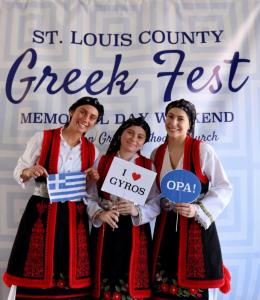 St. Louis County Greekfest at Assumption’s Greek Orthodox Church, located at 1755 Des Peres Road, returns with its signature foods and pastries. Counted among the festival’s favorites is the Souvlaki aka shish-ke-bobs. Stop by and follow the smoke. The intoxicating aroma Greekfest’s signature savory skewers of season pork and chicken being grilled over the open charcoal pits will pull you through the church grounds to the various outdoor and indoor locations where you can enjoy menu selections of grilled meats, sandwiches, traditional dishes as lamb shank, dolmades, gyro plates, spanakopita and the star attraction on the dessert menu, baklava.
Greekfest opens May 22 and runs through Memorial Day weekend. This year’s event is once again credit/debit card ONLY. Cash will not be accepted. For a complete schedule or to download the ultimate Greek Fest playlist on Spotify, visit www.stlgreekfest.com.
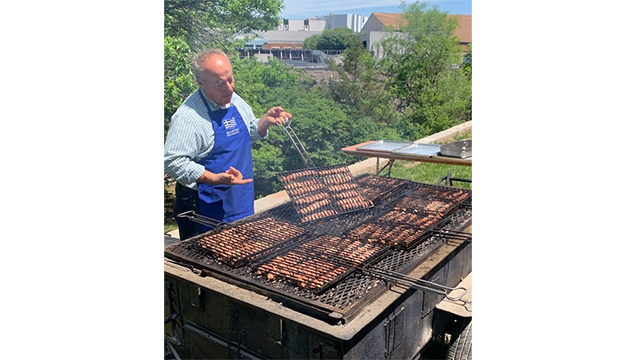
Meanwhile, back in the backyard, grills and smokers stand ready to barbecue spareribs, pork steaks, and grill burgers and brats. Grilling and barbecuing has defined the summer holidays, which begs the question, What’s the difference between barbecue and grilling? Barbecuing is cooking low and slow. That’s what is needed for meats like ribs, pork shoulder and brisket. Slow cooking/smoking develops tenderness without sacrificing moistness while achieving that smoky flavor barbecue fans crave. Grilling is cooking hot and fast is perfect for brats, burgers and steak. Most backyard chefs grill more than we barbecue. It still provides great flavor while good allowing a meal to be grilled a matter of minutes.
For those looking to bridge the gap between barbecuing and grilling consider direct and indirect cooking on a classic kettle-style smoker grill.
To grill using the direct method on a charcoal grill, spread prepared coals evenly across the charcoal grate. Set the cooking grate over the coals and place food on the cooking grate. Place the lid on the grill and lift it only to turn food or to test for doneness. Some cooks direct grill without the using the lid. Either way, direct cooking produces a result similar to broiling.
The indirect method, which is similar to roasting, is archived by arranging hot coals evenly on either side of the charcoal grate. A drip pan placed in the center of the charcoal grate between the coals is useful to collect drippings that can be used for gravies and sauces. It also helps prevent flare-ups. For longer cooking times, add water to the drip pan to keep drippings from burning. Place the cooking grate over the coals and place the food on the cooking grate, centered over the drip pan or empty space. Place the lid on the grill and lift it only to baste or check for doneness at the end of the suggested cooking time.
Celebrate Memorial Day weekend by grilling/barbecuing up your favorite meats. Include a Greek salad and a classic Greek pastry to complete a menu that will have your guests shouting Opa while giving three cheers to the backyard chef.
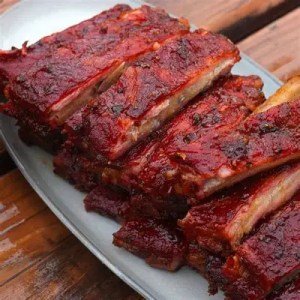 Memphis Wet Pork Ribs (Courtesy of National Pork Board)
4 racks St. Louis style ribs (spareribs can also be used)
1/4 cup dark brown sugar (for dry rub)
1/4 cup white sugar
1 Tbsp. kosher salt (for dry rub)
1 Tbsp. black pepper (for dry rub)
1 Tbsp. smoked paprika
1 tsp. granulated onion
1 tsp. granulated garlic
1/2 tsp. dry mustard
1/2 tsp. celery seed
1/2 tsp. cayenne pepper
1/2 tsp. dry thyme (ground, for dry rub)
1 Tbsp. unsalted butter
1/4 cup yellow onion (chopped)
2 cloves garlic (chopped)
1 cup ketchup
1/2 cup water
1/2 cup apple cider vinegar
1/2 cup dark brown sugar (for sauce)
1 Tbsp. Dijon mustard
1/2 tsp. dry thyme (ground, for sauce)
1/2 tsp. oregano
1/2 tsp. kosher salt (for sauce)
1 tsp. black pepper (for sauce)
Dry rub: Mix 1/4 cup dark brown sugar, 1/4 cup white sugar, 1 Tbsp. kosher salt, 1 Tbsp. smoked paprika, 1 tsp. granulated onion, 1 tsp. granulated garlic, 1/2 tsp. dry mustard, 1/2 tsp. cayenne pepper, and 1/2 tsp. ground dry thyme in a bowl until well dispersed.
Peel membrane from ribs and place on sheet pan or cutting board. Liberally sprinkle with dry rub and work it into meat with your hand.
Set smoker to 225-230°F and smoke ribs, bone-side down, for 5-7 hours until reaching an internal temperature of 145 degrees F. Allow a 3-minute rest. Cook times will vary based on smoker and preferred tenderness.
Memphis style BBQ sauce: In a saucepan over medium heat, place butter, onion, and garlic. Sauté for 5 minutes until soft and translucent. Add remaining ingredients, bring to simmer for 5 minutes and turn off heat. In a high-speed blender, puree contents of pot until smooth, making sure it’s not too hot or the top can pop off. Refrigerate until ready to use.
In the last hour of cooking, baste ribs with BBQ sauce until meat has a wet and shiny appearance.
 Classic Greek Salad
For the dressing:
1/2 cup olive oil
1/2 cup red wine vinegar
juice of one lemon
4 cloves garlic , minced
1 tablespoon dried oregano leaves
1 teaspoon kosher salt
1 teaspoon black pepper
1 teaspoon sugar
The salad:
3 tomatoes, chopped
1 cucumber, sliced or diced
1 medium red onion, thinly sliced
1 cup feta cheese, crumbled
1 1/2 cups Greek black olives
1 large head romaine lettuce
Make the dressing by mixing the oil, vinegar, lemon juice, garlic, oregano, salt, pepper and sugar. Let the dressing marinate for at least 30 minutes.
Place tomatoes, cucumber, red onion and olives is a bowl. Stir in dressing and allow to marinate for an hour. Just before serving toss in the chopped romaine. Sprinkle feta cheese on top.
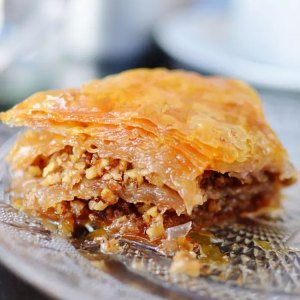 Baklava
½ pound butter
1 package phyllo
Filling
1-pound walnuts (or almonds), finely chopped
1 teaspoon cinnamon
1 cup sugar
2 teaspoon almond extract
Mix filling ingredients together set aside.
Syrup:
½ cup water
1 cup sugar
zest of one lemon
2 cinnamon sticks
1 teaspoons whole cloves
1 cup honey
In a 2-quart saucepan, combine water, sugar, lemon zest, cinnamon and cloves in a saucepan. Heat over s medium low heat, simmering for 10 minutes. Pour in honey, mix and remove from heat, set aside. Heat the oven 325 degrees.
Brush a jelly roll pan with melted butter. Place a sheet of phyllo on the buttered pan Lightly butter top of sheet and top with another phyllo sheet. Butter and continue until eight sheets have been used to make the bottom crust. Sprinkle about a ½ cup nut mixture over top. Cover with another sheet of phyllo, buttering top of phyllo sheet. Continue until all the nut mixture is used or until there is only 7-8 sheets of phyllo remaining. Build top as the bottom – placing buttered sheets on top of final layer of nuts.Make about ½-inch cuts across top of pastry to create a diamond pattern on baklava. Brush with more butter. Bake for 45 minutes. Remove from oven and spoon some of the syrup overtop to glaze pastry. Increase oven temperature to 350. Return baklava to the oven and bake until pastry is golden brown, then remove from oven. Carefully pour remaining syrup over baklava. Allow pastry to absorb all the syrup. Allow to cool before serving.