By Rob Rains
Even though Brian Alazzawi’s career playing baseball ended after one year in junior college, there is a reason he can relate to the players in the Cardinals’ organization that he works with on a daily basis.
Alazzawi may not know what it’s like to be on the mound trying to shut down an opponent’s rally, or what it’s like to be batting with the bases loaded and a game on the line in the ninth inning. But when it comes to knowing how to deal with pressure and the highest level of stress possible, there might not be anybody more prepared or equipped to talk about it than Alazzawi.
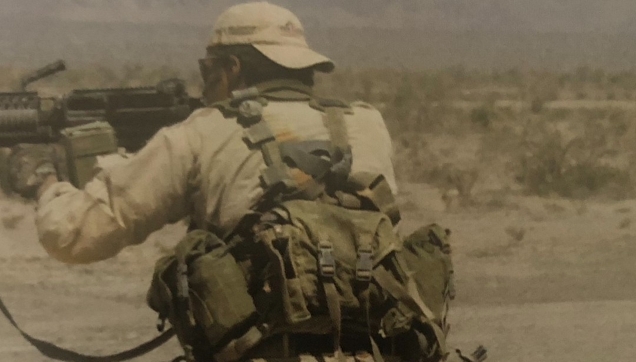
Before beginning his job with the Cardinals, where he is now the organization’s mental skills and well-being coordinator, Alazzawi spent 20 years in the Navy, the final 18 as a member of the prestigious Navy SEALs.
 During his career he had multiple deployments to Iraq and Afghanistan, including one assignment to Ramadi, Iraq in November 2006 that is the subject of a new motion picture, “Warfare,” which began airing in theaters last month.
“What we have in common, whether you are an athlete or working in special operations, there is an attrition rate,” Alazzawi said. “You are trying to do something most men become disqualified for or fail at. You start off with 100 men in SEAL team training and it’s about a 75 or 80 percent attrition rate. It’s greater in baseball.
“These guys are pros. One thing I have heard over the years is they talk about going to battle. They talk about attacking and being aggressive; controlled aggression. They talk about team before self.
“I know it’s not life or death, but one thing I tell guys is that the same tools I used to get through combat, to go from a defensive to an offensive posture, is the same tools you can use when you start spinning out of control, when you start questioning, when that self-doubt kicks in; when you are like, ‘Oh man, we are outnumbered. I’m not good enough.’ It’s like, ‘No, fall back on your training.’ A lot of conversations I have with guys is just that.”
While he never imagined back then that he would be working in baseball in the future, Alazzawi can now see that all of the experiences he went through, all of the dedication and hard training it took to survive, are similar elements of what a professional athlete goes through.
“I can appreciate the mindset coming from the culture I was in before,” Alazzawi said. “You want to be the best. You are considered the best and you want to stay there … I saw an opportunity to mirror the team that we built in a SEAL platoon.”
“No way”
Alazzawi was once told there was no way that he would ever become a Navy SEAL, similar to what a lot of young baseball players hear about their chances of playing the sport at the highest level.
He had spent two years in the Navy as a fleet sailor after graduating from high school before he left the military and enrolled in college in his native Michigan. That included his one year of playing baseball at Kalamazoo Valley.
“It felt like I was grasping for something that had already passed,” Alazzawi said. “It was on to my next chapter.”
Alazzawi earned his degree from Western Michigan and began working, but was drawn to the SEALs.
“My father was from Iraq and I was told there was no way I was ever going to get clearance to become a Navy SEAL” he said. “I kind of took that when I left the Navy the first time. I went to school, but it was always in the back of my mind that it was something I wanted to do.
“I was fascinated by the lifestyle, the job. I finished school, worked some dead-end jobs, but I was doing triathlons, working out and training. Everything I was doing was based on me wanting to be a frogman. I finally packed my bags and went back in the military.”
 Alazzawi began the long, intense training process. He got through a 30-week boot camp, then five months at Army Airborne school, followed by cold weather survival training in Alaska. Then he went to survival school, learning how to live off the land. That training included being captured and treated like he was in a POW camp. Finally, he graduated and became a SEAL.
“I thought at the time I would do my four years then get out and get into something really cool like the FBI or the CIA,” Alazzawi said. “After my first few years in the Navy, when it was time to get out or re-enlist, I thought, ‘I don’t think there’s anything I can think about doing that is going to be as cool as what I’m doing now.’ So I re-enlisted.”
The four years became eight, eight became 12, 12 became 20 – a full career.
“I loved what I was doing,” Alazzawi said. “I loved the guys. Really it was about the guys and the culture, the camaraderie, the brotherhood … I decided to do my 20 and see where I would go from there.”
Before he could begin that next phase of his life, however, and start working for the Cardinals, came the day in Ramadi when Alazzawi and his fellow SEALs were caught up in the most intense battle of his career against Al-Qaeda insurgents as the U.S. forces tried to regain control of the city.
It’s that day, Nov. 19, 2006, that is the subject of “Warfare.”
“There were some other firefights that were pretty hairy, but that particular day, being overwhelmed, was one of the most intense,” Alazzawi said. “It was really like a hornet’s nest.”
“One of the worst days of our lives”
“Warfare” was co-written and co-directed by Ray Mendoza, the captain of the SEAL team involved in that battle. He and Alazzawi had met three years earlier, in the SEAL boot camp, and became friends.
“The goal of the movie was not to create something that was unrealistic heroics that you see a lot of, the fluff, a lot of the character development,” Alazzawi said. “The guy that directed it wanted to paint a picture of what combat really looks like.”
After he retired from the SEALs, Mendoza went to work in Hollywood as a technical advisor and came up with the idea for this movie.
“It was a bad one,” Mendoza said about what happened that day. “I wanted to be honest about it. My main priority was to recreate it for Elliott (Miller, one of the SEALs who was severely injured in the battle). He doesn’t remember what happened. Brian and everyone else who was there gave their perspective. We all remembered what it sounded like, what it felt like, the temperature, the colors, everything. Elliott has zero.
“It was one of the worst days of our lives.”
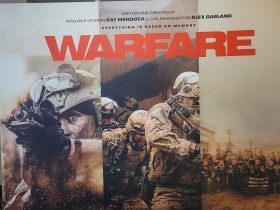 Alazzawi met with the actor who portrays him in the film, Noah Centineo, and spent time on the set when the movie was being filmed outside of London. The goal of the SEALs who were there was to make the movie as realistic as possible.
“He (Mendoza) wanted to tell that story and put light onto what combat is really like; take out all the BS, and let people know what happened when you were in the fight of your life,” Alazzawi said.
The movie shows Alazzawi’s involvement in a gun battle on the roof of the house the SEALs had occupied.
Being on the movie set brought back all of the memories of that day for Alazzawi.
“When I walked in that house (on the movie set) I was like, ‘Holy crap, you guys really recreated that place. It was eerie how close to realistic it was,” he said.
Several Cardinals players have seen the movie, and even before that, knew about Alazzawi’s career in the SEALs through their frequent conversations.
“Most of the guys know my background,” he said. “I think guys can appreciate what I’ve gone through.”
One player who Alazzawi has become close with is Brendan Donovan. The two met in 2019 in Peoria, shortly after Alazzawi started working for the Cardinals. Donovan was drawn to Alazzawi because of his own family’s military background – Donovan’s dad was a career Army officer.
“I tried to go out of my way to be close to that because I love the mentality of anything military,” Donovan said. “That’s how the relationship started, but he’s someone I can talk to on a daily basis. It’s great to have him and my dad to keep me sharp.”
“Tactical athletes”
It was conversations about his past that helped direct Alazzawi toward a career in baseball once he retired from the SEALs.
When he was training in San Diego, many visiting players came by to see the SEALs’ training facilities. One of those teams was the Arizona Diamonbacks. The players then invited the SEALs to a game and gave them a tour of the clubhouse and their facilities.
One of the players who did that was Paul Goldschmidt and he and Alazzawi developed a friendship.
“We got a lot of questions from the players; they wanted to know the cool stuff like how many guys have you killed, where have you been, stuff like that,” Alazzawi said.
It was other conversations, however, which left Alazzawi thinking about the similarities between his life in the SEALs and that of professional baseball players.
When Alazzawi left the SEALs he contacted some friends who were working for the Texas Rangers and that led to him working in the organization. A conversation with Goldschmidt followed, and based on Goldschmidt’s recommendation to officials in the Cardinals’ front office, Alazzawi was hired in 2019.
Alazzawi’s work also includes meetings with managers, coaches and front office personnel.
“I had coffee with GMs who were in town, and they wanted to know things like, ‘How do you assess, how do you select that caliber of individual, where does that brotherhood come from?’” Alazzawi said of their curiosity about the SEALs and how it could relate to baseball. “Where does that team before self concept come from? How do you teach that? Do you teach that or do you have it already? There were so many questions.
“At one point in my career it was very hard to answer simple questions like that. I was like, ‘You just do it. You harden up. It’s bigger than you.’ As I got smarter and wiser and more beat up, I found ways to get back in the fight.”
Alazzawi knew that in the SEALs they were referred to as “tactical athletes.”
“The strength training, the high pressure, high stress, taking care of our bodies and minds,” Alazzawi said. “The work is hard but life still has to happen … We were educated on nutrition, sleep, performance. It was very similar. We modeled our training facilities off professional sports.
“There were three pillars – physiology, the mechanical component and skill set, and the mental cognitive element. A lot of times that cognitive element is overlooked.”
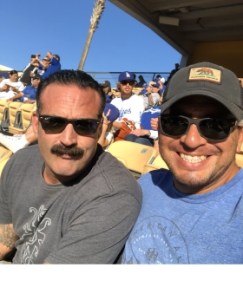 Mendoza also understands the similarities between the SEALs and baseball and is not surprised Alazzawi has made a successful transition to his new job.
“When we met, Brian was one of the older guys,” Mendoza said. “He stood out as somebody who was a leader. He was always giving guys tips on running.
“He’s always been a go-getter. He had confidence and was a good public speaker. I think part of that was because one of his first jobs was as a car salesman. There’s some technique there. He was always very good at selling things.
“I grew up playing baseball too, and some of the pacing is very similar to the military. One minute there is nothing going on and then you are up with the bases loaded and two outs in a tie game. You are either going to be the hero or a zero. That’s a lot of pressure that happens instantaneously. You have to be ready for the moment.”
“Win or learn”
Alazzawi’s job with the Cardinals includes spending time at each level of the organization. The performance department also has a person working at each level and Alazzawi is constantly monitoring what issues players and staff are dealing with throughout the season.
“The important thing is perspective,” Donovan said, “and understanding that failure is part of the process. It’s not enjoyable, but you have to learn from it. You have to fall back on your training.
“There is a little more of a life and death situation (in the SEALs) and my dad would admit it too, but everything from the travel, the daily grind, all of it is very similar. It’s pretty cool I get to lean on him and my dad.”
Alazzawi works closely with Kevin McCulloch, the major-league team’s mental performance coach.
“He has a personal experience with it, and it’s difficult to challenge because of the intensity of it, and I think a lot of the players can relate to that real-world experience and situations he was in,” McCulloch said. “We talk about how we compliment each other a lot. He has really a strong kind of intensity to him; my background is much more from a psychotherapy background. We understand each other.
“I think you see the way the players recognize it; kind of anecdotal the way they talk about it helping them. It’s powerful. I think the guys feel well-supported and well-cared for in that way.”
Alazzawi’s conversations with players often include references to the training and background he went through with the SEALs and how it can be applied to baseball.
 “One of the secrets not just of the SEALs but all of the special operations community is that training is hard. In the training you are designed to fail,” he said. “The saying is you sweat in training so you don’t bleed in battle. That was on the back of T-shirts the Cardinals wore for a long time.
“There’s also a saying that it’s not win or lose, it’s win or learn. There’s growth that comes from failing if you allow yourself to reflect on that. A lot of guys journal, or study film, study the enemy, collecting intelligence. I see a lot of similarities between preparing for combat operations and preparing to compete.”
What Alazzawi also has come to learn, and appreciate, is the motivation that drives pro athletes.
“They don’t want to know when they do well, they want to know when they are doing bad so they can fix it in real time,” he said.
There have been multiple players over the years who Alazzawi or others in his department believe they have helped. Those are the victories that excite him.
 “One of the things I talk to guys about is just about discipline, about sacrifice,” Alazzawi said. “Discipline is sacrificing what you want right now for what you want tomorrow. Distractions; that shiny object in the corner, you don’t need that. You need to go home and sleep. You need to focus on nutrition. You need to focus on recovery. You need to focus on training.
“We talk a lot in SEAL teams, any special ops forces, that the secret sauce is really just mastering the basics. It’s repetitive, it’s over and over, drill after drill, until it’s just muscle memory and you just respond, falling back on the level of your training and preparation. That’s a message I continue to convey to these guys.”
Alazzawi also knows that a big part of his job is listening, offering advice when it is requested.
“There’s more to it than just taking care of your body,” he said. “There’s talking to somebody if you need help. Getting that different perspective when you find you are stuck, talking about what’s holding you back. The reality is it’s just ourselves – that’s what’s holding us back. Sometimes we need that second opinion. That’s just part of our journey.”
Mendoza is happy for Alazzawi and he has one wish for the Cardinals’ organization when it comes to his friend’s work.
“He has a lot of knowledge, and I hope they are taking advantage of him and what he has to offer,” Mendoza said. “He has a lot of skills and I’m not just saying that because he’s my friend. When he takes over a program, he will leave it better.”
Follow Rob Rains on X @RobRains
Photos courtesy of Brian Alazzawi and Ray Mendoza