By Rob Rains
SPRINGFIELD, Mo. – From his seat behind home plate, Cardinals’ area scout Pete Parise watched Michael Watson pitch for an inning as he struck out two of the three hitters he faced.
Wanting to watch from a different angle, Parise moved down the line when the lefthanded Watson, pitching for Sam Houston State, returned to the mound in the second inning – and watched as Watson struck out the three Tarleton batters who came to the plate in that inning.
“He was throwing 87 to 90 miles per hour, but nobody could pick it up and everyone was swinging and missing,” Parise said. “I just thought, ‘This works.’”
What Parise saw that day, May 4, 2024, when Watson finished with 11 strikeouts in seven innings, is still working today. Just a year after signing as a non-drafted free agent, Watson has already reached the Double A level in the Cardinals’ farm system and has put himself on the organization’s radar.
For a team starving for pitchers who can miss bats, Watson has made the Cardinals do what he made Parise do on that day 15 months ago – notice him.
 Since arriving in Springfield a month ago after he was promoted from Peoria, the 23-year-old Watson has appeared in nine games and has become one of the team’s go-to relievers in late-inning, high-leverage situations.
In those nine appearances, Watson has worked 12 innings and has only allowed six hits and two earned runs while striking out 19 – an average of 14.2 strikeouts per nine innings. Since he joined the organization last July, Watson has given up 41 hits in 67 innings while recording 90 strikeouts. That’s an average of 12 strikeouts per nine innings.
The numbers, however, only tell part of Watson’s story, which serves as yet one more reminder that in baseball, players can come from anywhere if they have a dream -and the ability to make it come true.
“It’s been a wild ride,” Watson said. “Never be afraid to bet on yourself; that’s kind of what I’ve done and continue to do.
“Everybody’s got a story. What you put into it is what you are going to get out of it. There’s no point in losing hope. You can pave your own path.”
A dream is born
Watson’s story begins in Glen Rose, Texas, a town of about 2,600 people 45 miles southwest of Fort Worth. There were 126 students in his high school graduating class.
Watson’s dad is a fire chief in neighboring Johnson County; his mom is a nurse practitioner. Watson developed his love of baseball from an early age, beginning playing T-ball when he was three.
When he wasn’t playing baseball as he got older, Watson had to complete his chores of taking care of the family’s cows, goats, donkeys (to protect the goats), chicken and geese. He also went hunting or fishing with his friends.
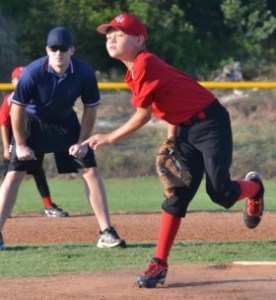 It was, he said, a “great” life – and it was when he was in high school that he knew he wanted baseball to not only be part of his life then but a big part of his future.
“When I was a senior I was probably throwing 85 but I had a dream to go play professional baseball,” Watson said. “I truly believed I was going to find a way to make it happen.”
Scouts did not flock to Glen Rose to see Watson pitch in high school and as he looked for opportunities of where he could pitch in college, he settled on a small NAIA school, Southwestern Assemblies of God University, a school of about 2,000 students in Waxahachie, Texas. The school has since changed its name to Nelson University.
“It was really the only true offer I had,” Watson said. “It was the best place for me to go and play as a freshman and develop. We didn’t have many stands but we packed them full of parents.”
Matt Cornacchione, the school’s baseball coach, picks up the story from there.
“We were hosting a prospect camp, which we do a couple of times in the summer, and Michael was there,” Cornacchione said. “I am blessed to have as my assistant Cliff Bartosh, who just happens to live in the area. He pitched for Cleveland and the Cubs (in 2004 and 2005) before his career was cut short by injury.
“He walked over with Michael and said, ‘We need this guy.’ Cliff knows what he’s looking for.”
Watson spent three years pitching for Cornacchione and Bartosh and by the time he was a junior, he struck out 134 batters in 93 2/3 innings, allowing only 63 hits. Despite that success, Watson’s path toward making his dream come true was at a roadblock.
Scouts weren’t coming to see him pitch then either, even after Watson had been successful in summer ball in the Coastal Plains League. The reality is that the reduction in the number of rounds in the amateur draft and the reduction of the number of minor-league teams since the pandemic has limited opportunities for players at that level.
“The NAIA level is a weird level of baseball,” said Cornacchione, who played at the level himself, against Don Kelly, the current Pirates manager. “Everybody still thinks they can do it because people have done it in the past. A lot of players have that dream. But realistically it’s more of an exception. It’s not normal for us.
“It’s hard to get drafted out of the NAIA level. Pre-Covid and pre-contraction, I think he’s getting picked in the 20s (rounds).”
Watson knew to make his dream come true he had to find a bigger school, where he could be noticed. With Cornacchione’s support, Watson put together videos and statistical information and began calling and emailing schools to see if he could find someone willing to give him a chance, and also find a place where he would actually have an opportunity to pitch and not just fill the last spot in the bullpen.
“I didn’t want to go to a place where I could pitch but wasn’t great competition,” Watson said, “or go to a bigger school without much chance to pitch. I probably talked to about eight or nine schools.”
Cornacchione knew what Watson would bring to his new school because he had watched it develop for three years.
“The big thing that has always stood out to me is his desire to win in a one-on-one situation. He’s always had that,” Cornacchione said. “He never struggled with self-doubt or belief he could get anybody out.”
Watson found a spot that he thought fit, Sam Houston State, a Division I school which also happened to have a catcher, Walker Janek, who was being projected as a first-round draft pick. For the first time in his life, scouts would be at Watson’s games, even if they weren’t coming specifically to see him.
Jay Sirianni, the coach at Sam Houston, liked what he saw from Watson.
“We took a chance on him,” Sirianni said. “He had a long track record of success. He worked his tail off, that was the best part.”
Watson started the season at Sam Houston in the bullpen but injuries gave him a chance to start. In his only year at the school he struck out 91 batters in 72 innings, allowing only 52 hits.
It was during last season when Watson believes his story took an interesting turn.
 “The crazy thing that happened and probably was the biggest blessing to my career was that my arm slot dropped, naturally, on its own,” Watson said. “I never realized it was happening until I got with the Cardinals and was watching video. Looking back, I could see that my release point was higher at the start of the season.
“It just added more deception to my fastball. I think it was just a case of my body seeking ways to be more efficient. The lower slot feels better and I think is more natural for me.”
The story doesn’t surprise Sirianni.
“The best part was Mike was always trying to get better,” Sirianni said. “After every start he would come in and say, ‘I need to throw my breaking ball more,’ or ‘my change up more.’ And I was like, ‘Mike, they’re not hitting your fastball, let’s throw that.’
“But that’s Mike in a nutshell. He’s always trying to look for that edge and figure out how to be a little bit better than he was his last outing.
“That’s why this is the greatest game ever. It doesn’t have to be the biggest kid or someone from the biggest school. You just need one guy to believe in you.”
That’s where Parise and the Cardinals become part of Watson’s story.
“I didn’t think it was going to be anything special”
Parise had been given a tip that Watson was worth a look from Ty Boyles, a scout in the Cardinals’ front office. The organization has a way of tracking data that flags players for either performance or pitch quality. Parise made plans to make a late-night drive from New Orleans to get to Huntsville, Texas, 90 minutes or so north of Houston, in time to see Watson pitch the first game of a doubleheader on the final weekend of the regular season.
“I didn’t think it was going to be anything special,” Parise admits now. “I asked a lot of scouts in the area if they had seen Mike or turned him in and I don’t think anybody paid attention to him. I think there were a couple of crosscheckers there that day, to see Janek.”
Parise wanted to learn more about Watson and the more he looked into his career, the more he liked what he found out.
“Including summer ball he was logging 100 or more innings every year,” Parise said. “He was durable, he performed, he struck guys out. It was right there.”
Parise stayed in touch with Billy Martin Jr., who was representing Watson, and liked it when Watson went back to the Coastal Plains League and then pursued an opportunity with the Kansas City Monarchs of the independent American Association a couple of weeks before the draft.
The fact that Watson wasn’t waiting around for the draft after completing his college eligibility was something the Cardinals noticed, especially when he signed with the Monarchs.
“One of our coaches at Sam Houston had a connection with the Monarchs and they needed a pitcher to start on July 4,” Watson said. “We looked into the rules and found out I could still get drafted or sign after the draft, and it was an opportunity to pitch against a higher level of hitters. I signed my contract the night of July 3, flew from Charlotte to Chicago the next day, took a 45-minute Uber ride to the team hotel and pitched that night.”
The desire impressed the Cardinals.
“One of the things that really stood out to us was the fact that he was out of eligibility but went to Indy ball,” Boyles said. “That showed us his eagerness and desire to continue his career. It was a strong vote of confidence for us.”
The July 4 game was the first of three starts that Watson made for the Monarchs. As Parise watched those games online, he knew part of his interest in Watson was because of his own similar career path.
Parise was a non-drafted pitcher out of Pittsburgh who went to an independent league, then signed with the Cardinals in 2007. He spent five years in the farm system, reaching Triple A.
“That helped him with us,” Parise said. “I kept up with him and Billy said I was the only scout bugging him about Michael. It worked out perfect.”
When the draft was completed, without Watson being selected, he signed the next day for a $10,000 bonus and a plane ticket to Palm Beach.
Watson helped the team win the Florida State League championship and started this year back at Palm Beach before beginning his climb through the organization, first to Peoria and then to Springfield.
“I want to make the most out of every opportunity that I have,” Watson said. “I want to keep my faith and know that God has a plan for me.
“Two years ago I had a dream that I wanted to make come true, but if you had told me where I would be now, I probably would have looked at you like it was a little bit crazy.”
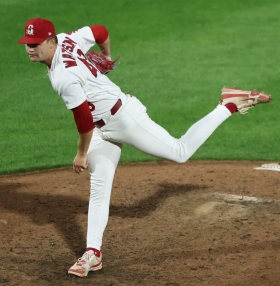 Somebody who doesn’t think what Watson has done is crazy is Cornacchione. He recently watched Watson pitch online for the first time in more than a year.
“It was fun to see him, and how he has physically matured,” Cornacchione said. “The understanding of who he is on the mound has really grown. He has a better understanding of what he has to do to be successful and what makes him good.
“I really believed he was going to have success because he’s done that throughout his career once he gets an opportunity. He’s not that 99 to 100 guy; he doesn’t profile as a first-round pick. But what he does is he’s always made people uncomfortable. He does something different.”
Both Springfield manager Patrick Anderson and pitching coach Eric Peterson have been encouraged by how Watson has pitched since reaching Double A.
“He’s a really good competitor and has a really good edge about him and mound presence,” Peterson said. “He’s always on the attack and fills up the zone. He has different ways to attack hitters.
“His overall confidence and mentality are impressive. He’s got good stuff, he’s just got to refine it a little more. He just has to maximize what he can do, which is fun to work with. He wants to learn and get better and is open-minded, which is another great trait to have.”
What excites Watson the most isn’t how far he has come, it’s about what will happen on the rest of his journey. The ending to his story has yet to be determined and Watson knows he will be the one writing it.
“My mindset is just to be ready to go every single day and go attack hitters,” Watson said. “I’ve got my foot in the door. I’ve got the opportunity. You don’t look back to where you started; just go perform every day. We’re all here for a reason.”
Follow Rob Rains on X @RobRains
Springfield Cardinals photos by PJ Maigi courtesy of Springfield Cardinals
Other photos courtesy of Watson family and Sam Houston State athletics