

Late-Season Series At Sportsman’s Park Against Pirates Turns Tide for 1926 Pennant
By Terry Lemons
A century ago in the closing weeks of a dramatic pennant race, the St. Louis Cardinals faced a showdown against the defending World Series champion Pittsburgh Pirates. The six-game series would be a turning point for the Cardinals in the 1926 season and signal the start of a golden era for the franchise.
Known as the “Little World Series,” the late August face-off drew unprecedented interest from fans across the Midwest, who eagerly hoped for St. Louis to win its first National League pennant. Fans camped out for tickets, scalpers had a field day, and anxious fans flooded KMOX radio with pleas to broadcast the games live.
The frenzy around the series marked the beginnings of the fan-driven “Cardinal Nation,” a devotion that would intensify further with the St. Louis triumph in the 1926 World Series against Babe Ruth’s Yankees. All of this combined to lay the groundwork for the region’s obsession with baseball, which continues playing out 100 years later.

1926: A Season for the Ages
In 1926, St. Louis had never seen a World Series. Neither the Cardinals nor the American League St. Louis Browns had ever won a pennant. Frustratingly, St. Louis was the last of the major league cities at the time without a World Series win.
So fans relished the Cardinals’ titanic battle for the 1926 pennant as late August approached. The Cardinals gained momentum during the summer following the mid-season additions of outfielder Billy Southworth in a trade with the New York Giants and aging pitcher star Grover Cleveland Alexander, whose alcoholism led to him being released by the Chicago Cubs.
The Cardinals faced a stiff challenge from the Cincinnati Reds and the Pirates, the defending World Series champions. Near the end of August, the Cardinals found themselves with a 72-52 record and in third place, a game behind the Pirates and a half-game behind the Reds.
With Pittsburgh heading to St. Louis for a six-game series on Aug. 29, it created what the newspapers ballyhooed as the “Little World Series.” With just a month left in the season, this marked the last St. Louis homestand of the year. The St. Louis Globe-Democrat described the series as the “crisis” moment for the Cardinals’ franchise.
The team braced for a huge crowd for the initial Sunday doubleheader. Fans slept outside the Sportsman’s Park gates to get prime seats. On neighboring streets, out-of-towners dozed overnight in Model Ts to get an early jump on tickets. Scalpers dodged police as they hustled to sell $1.35 tickets for $7 with some going as high as $15.
Interest in the Cardinals didn’t stop at the city borders. Some 2,500 Kansas City residents made the cross-state journey into town for the game. And foreshadowing decades to come, interest in the team surged well beyond the Missouri and Illinois borders. The St. Louis Post-Dispatch noted that with “interest (growing) in the South and Southwest over the Cardinals’ chances that the Missouri Pacific has begun to post scores of the league leaders in their passenger trains each day.”
Regular Cardinals radio broadcasts had not yet started. But fans deluged KMOX radio with requests to carry the Pittsburgh games. KMOX took note, sending announcers up to the North Side ballpark – a sign of things to come when the station started regularly broadcasting games at the start of the 1927 World Series.
Sunday, Aug. 29, 1926: Rains Creates Muddy Mess
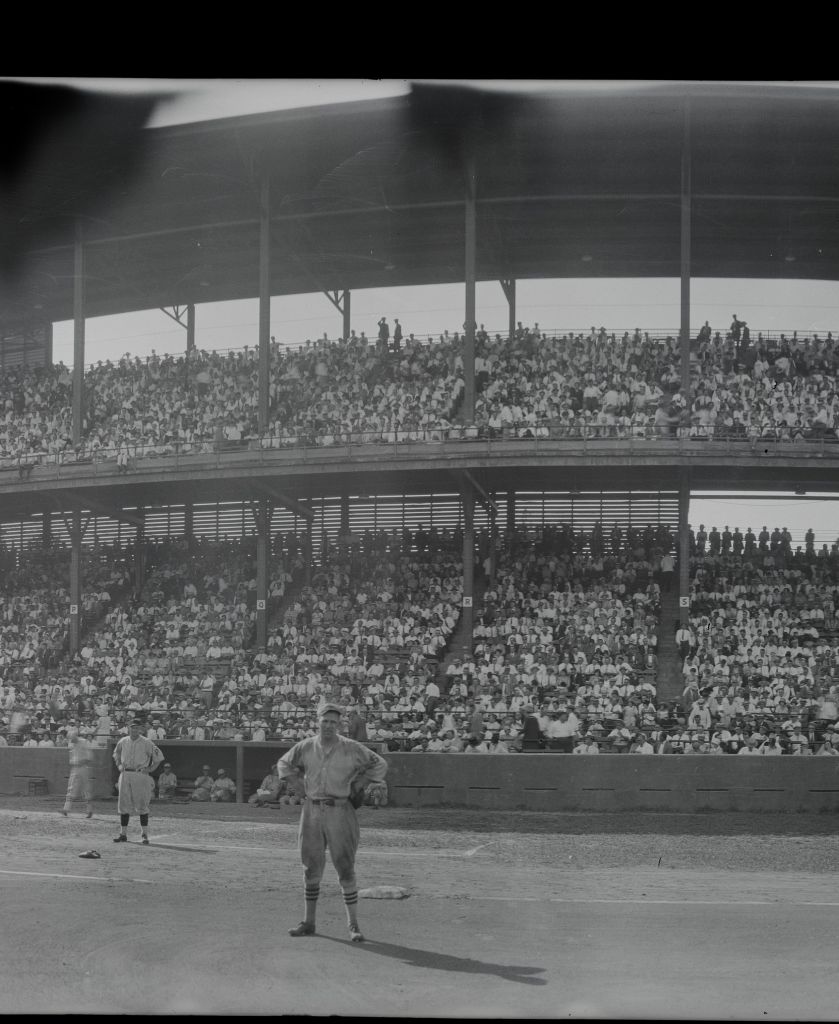
For the start of the “Little World Series,” 35,798 fans jammed the park that Sunday, just short of an attendance record. With the crush of fans, the team allowed people to stand on the field in the foul grounds behind rope lines. But the day was anti-climatic as two massive rainstorms pelted the crowd and turned the field into a “sea of mud,” the Globe-Democrat noted. The long rain delays meant just one of the games would be played.
The Cardinals jumped out first 2-0 in the first inning as third basemen Les Bell knocked in two runs with a double. Alexander kept the Pirates at bay until a slippery ball on the infield set up a two-run single by Pirate pitcher Vic Aldridge. Alexander and Aldridge battled through 10 innings and nearly five hours without allowing any further runs. But it was getting dark. And with no lights at the park for another 16 years, umpires declared the game a tie.
Monday, Aug. 30, 1926: Cards, Pirates Battle in Doubleheader
That set up a Monday doubleheader on Aug. 30. The ballpark broke a work-week record with 29,522 attending. The Cardinals sent up the team’s winningest pitcher, Flint Rhem, but the Pirates patched together single runs in three different innings to win the opening game 3–0 as Pittsburgh ace Ray “Whiz” Kramer stymied Cardinal bats and allowed just two hits.
In the second game, the grandstands fretted after the Cardinals fell behind 1-0 in the first inning. But as they did all season, the Cardinals battled back, tying the game in their half of the first inning. St. Louis pulled away with three runs in the fifth inning. First baseman Jim Bottomley knocked in two along with two more from third basemen Bell, including an eighth inning home run off Pittsburgh’s “Bullet” Joe Rush. The Cards won the game 5–3 behind future Hall of Famer pitcher Jesse Haines.
Tuesday, Aug. 31, 1926: History for the Cardinals in Doubleheader Sweep
Yet another doubleheader awaited on Tuesday, Aug. 31. This time, it would be a day destined for the Cardinals’ history books.
In the opening game, manager and second baseman Rogers Hornsby drove in the first run with a sacrifice fly in the second inning. Bell continued his mastery of Pittsburgh pitching as the third baseman blasted a two-run homer in the third inning and added two more hits. Left fielder Chick Hafey added a solo home run as the Cardinals won the first game, 6–1. Bill “Wee Willie” Sherdel, the masterful left-hander who will be inducted into the Cardinal Hall of Fame on Sept. 12, scattered seven hits to get his 13th win of the season.
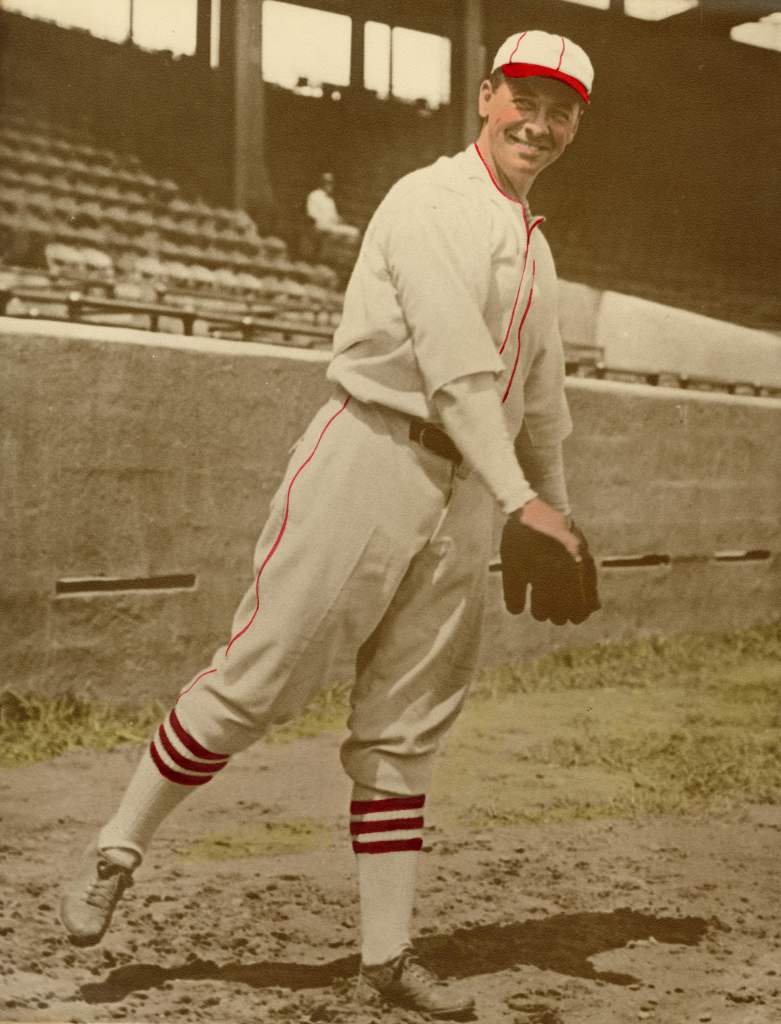
But the Cardinals faced a problem in the second game. With the Cardinals’ staff worn down from so many games, Hornsby turned to an unlikely source, a choice that legendary baseball writer J. Roy Stockton of the Post-Dispatch called “shocking.”
Allen Sothoron, more of a coach than a player, walked onto the mound to skeptical looks from the 23,279 fans. But Sothoron, age 33 and one of a handful of pitchers in the league still allowed to legally throw a spitball, responded with the game of his life. One of the Cardinals’ earliest secret weapons, Sothoron allowed just three hits and an unearned run across nine innings. The Cardinals could manage only six singles in the game, but the team patched together hits from Hafey and rookie shortstop Tommy Thevenow to knock in two runs off Johnny Morrison, nicknamed “Jug Handle” for the vicious shape of his curveballs.
Sothoron became an unlikely hero in the 2–1 win, completing the Cardinals’ doubleheader sweep. Coupled with a Reds loss to the Cubs, this pushed the Cardinals into first place. This marked the first time in Cardinal history that the Cardinals entered September in first place – a scene that would be repeated many times in the decades to come.
After the final out, a wild scene unfolded at Sportsman’s Park. “Fans streamed from the stands and the Cardinals raced from the dugout,” Stockton wrote. “Sothoron was the center of a swirling mass of humanity.”
The joy went beyond the ballpark. “All St. Louis baseball fandom was delirious with unbridled joy last night,” Martin J. Haley wrote in the Globe-Democrat. “The old town, once the major league door mat, the butt of second division sarcasm, was leading the National League parade.”
Decades later, the Cardinals memorialized Sothoron’s milestone by placing a marker noting the historic game – and the team’s emergence into first place – in the bricks outside Busch Stadium III.
Wednesday, Sept. 1, 1926: Cardinals Finish Off Pirates
For the final game of the series, the Cardinals sent out Art Reinhart for a spot start. The desperation of the Pirates could be seen by them turning again Kramer, who won the Sunday game and was coming back on just one day’s rest.
After falling behind 1-0 in third, Reinhart kept the Pirates in check until the Cardinal bats came alive. Hornsby belted a triple and a smashed a 7th inning solo home run – which the St. Louis Star described as “one of the longest drives of the season.” Once again, Bell joined in with two more hits and an RBI. The Cards ended their final home game of the season with a 5–2 win.
The “Little World Series” changed the season for the Cardinals as they won four out of five games with one tie. The series’ loss wounded the Pirates, who fell to third place, two games behind the Redbirds. The series essentially doomed Pittsburgh’s season, as the team never got closer to first place after that. The Pirates trailed off during the final month of the season to settle for a third-place finish.
A Final Grueling Road Trip
The Cardinals had no time to savor the big win against Pittsburgh, which capped a homestand where they won 15 out of 20 games. The team immediately left town on a late night train ride to Chicago, where the team would spend the rest of the season with 24 games on the road. Unheard of in modern baseball, such a long road trip reflected travel by train and the city’s position at the league’s western and southern edge.
St. Louis continued battling the Reds through the final weekend of the season, holding a razor-thin lead for most of the month except for one day.
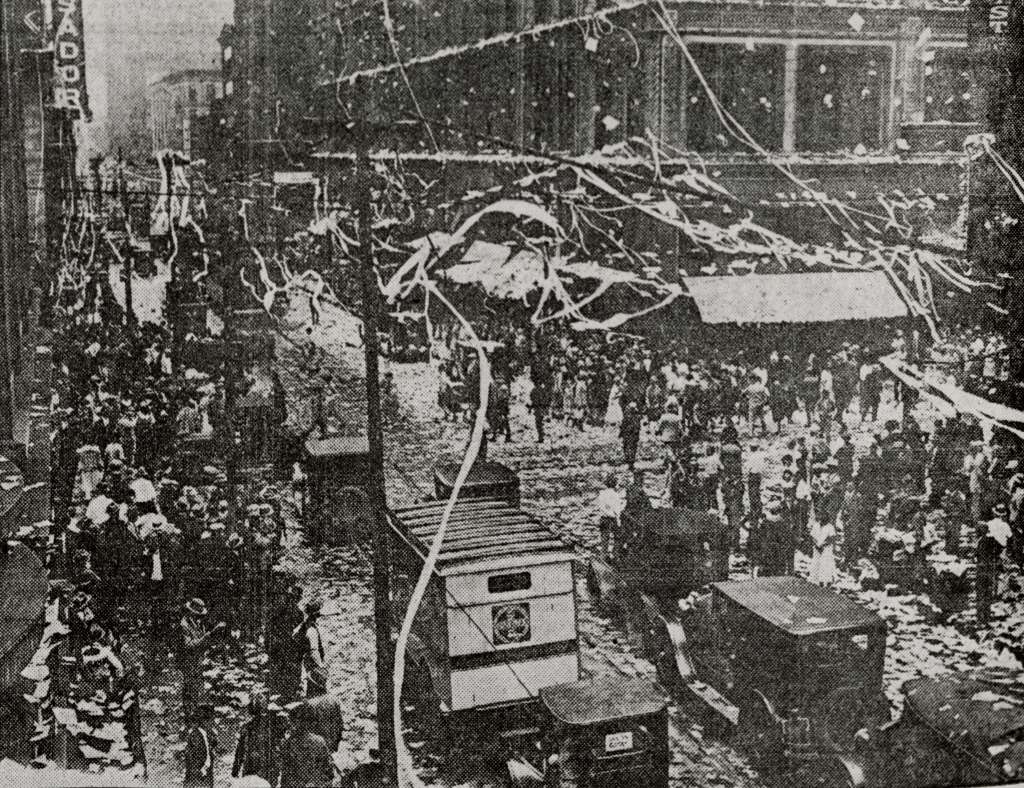
The season came down to the final Friday of the final weekend. With the Cardinals in New York playing the Giants, Southworth hit a dramatic home run against the team that traded him earlier in the season. Sherdel rescued the team with eight innings of relief pitching after Rhem struggled in the first inning. The combination sealed the city’s first pennant on Sept. 24, 1926. At home, the response was immediate: St. Louis erupted in bedlam that afternoon as the downtown streets were filled with ticker tape and 100,000 joyous fans, who partied past midnight.
That set up a dramatic World Series against Babe Ruth and Yankees that ended with the Cardinals’ first World Series triumph.
The Cardinals victory over the Pirates in the “Little World Series” catapulted the team to it’s first “Big” World Series win. And the 1926 season started a Cardinals dynasty in the National League, as the team won nine National League pennants and six World Series titles during the next 20 years. In all, the Cardinals would win 11 World Series during the next century.
So a century ago, a pivotal series against Pittsburgh marked a turning point in the history of Cardinals baseball — and helped turn St. Louis into a baseball town.
————
He will conduct a book signing at Ballpark Village’s Baseballism Store, 761 Clark Ave., on Saturday, Aug. 29 from 11 a.m. until after the game.More information on the book is at www.1926baseball.com
Author
-
 Terry Lemons, is a former White House reporter and St. Louis native. After graduating from the University of Missouri, he worked as a newspaper reporter for the Springfield News-Leader and the Arkansas Democrat-Gazette, later moving to Washington, D.C., in the 1990s to cover the Clinton White House and Congress.
He is the author of “The Year St. Louis Became A Baseball Town: The Cardinals, Babe Ruth & The 1926 World Series," published by Arcadia Publishing.

