By Rob Rains
As he watches the playoffs on television from his home outside of Austin, Texas, Scott Linebrink’s thoughts occasionally drift back to the role he played in the Cardinals winning the 2011 World Championship.
Fifteen years later, it still stings.
Linebrink was pitching for the Braves then and it was what happened in their final game that year that directly impacted the Cardinals.
Going into game 162 of the regular season, the Cardinals and Braves were tied with 89-72 records. The Braves had begun September with a 10 ½ game lead over the Cardinals in the wild card race but gradually saw that lead evaporate.
“We got about as cold as you could get,” Linebrink said. “We had lost the last four games going into that final game.”
 The Cardinals won their game in Houston, then had to sit in the clubhouse and wait for the outcome in Atlanta to know if they would be playing a game 163 to break the tie with the Braves for the only wild card spot that season. If the Braves lost, the Cardinals would be heading to Philadelphia to begin the Division Series against the Phillies.
The Braves were playing the Phillies, who had already clinched the NL East title. The Braves were leading 3-2 going to the ninth inning, when the Phillies scored to tie the game and sent it into extra innings.
The game went to the 13th inning and Linebrink, a 12-year veteran who had been traded by the White Sox to the Braves the previous winter, was summoned out of the bullpen.
“We knew we had to win to tie,” Linebrink said.
Linebrink struck out the leadoff hitter, then issued a walk on a 3-2 pitch. Jimmy Rollins flew out for the second out but a single by Chase Utley sent the go-ahead runner to third. On a 2-2 pitch, Hunter Pence singled to give the Phillies the lead before Linebrink got the final out of the inning.
In the bottom of the 13th, with the Braves’ season on the line, Chipper Jones struck out. Dan Uggla walked, but when Freddie Freeman grounded into a double play, their season was over and 800 miles away, the Cardinals began to pop open bottles of champagne.
“It was tough,” Linebrink says now. “In a lot of ways it was like, ‘I can’t believe that happened.’”
There were two things that Linebrink had no way of knowing that night. The first was that four months later he would be wearing a Cardinals uniform in spring training. The second was that that game would turn out to be the final game of his career.
That’s really where Linebrink’s story begins.
“Six months of things not really working out”
“In some ways it feels like it was 15 years ago and other memories are very fresh,” Linebrink said.
Linebrink, 35 at the time, became a free agent and the following February signed with the Cardinals.
“I was ready to move on and focus on the next year,” he said. “Signing with the Cardinals it was like, ‘If I can’t beat them join them.’ I had a bunch of buddies on that team with (Adam) Wainwright, Matt (Holliday) and (Lance) Berkman. I was ready to put that game behind me and get a fresh start; have it be a bump in the road.
“But that never happened.”
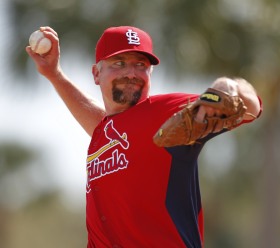 Linebrink hurt his shoulder in spring training and never pitched for the Cardinals during the regular season. What was expected to be a three-week setback turned into six weeks, and Linebrink still wasn’t recovered enough at that point to pitch.
By June, the Cardinals were ready to call up Joe Kelly from Triple A and needed to open a spot on the roster. Linebrink was in the clubhouse when he got a tap on the shoulder and was told he was wanted in the manager’s office, where Linebrink was informed he was being released.
“I got it from a business standpoint, but there was a lot of confusion, frustration, anger,” Linebrink said. “I just wanted to get home to Texas and thought then I would be in a better position to figure things out.”
Linebrink really didn’t know then how long that would take – but he knows the answer now.
Fifteen years.
“I don’t know if I ever really dwelt on that a whole lot, the way my career ended,” said Linebrink, who is now 50. “It was six months of things not really working out. I was ready to move on.
“I don’t know if anybody really deals with the end of their career properly. Somebody dwells on it too much; others start on something else. I’ve learned a lot over the years about the importance of taking the time to grieve that properly.
“Everybody’s dream is to win the World Series and have a parade. The truth of the matter is an overwhelming majority of guys don’t end their career the way they wanted to. You pour into something so much and one day it’s just gone.”
What Linebrink knows now is that the end of his baseball career was just the beginning of the next chapter in his life.
“I think a lot of folks think the greatest thing that is going to happen in their life just happened, and now it’s over with,” he said about the end of a player’s career. “What do I do now? I’m here to tell you there’s a whole lot more on the other side and if you lean into it you will find some really interesting stuff that God has for you.”
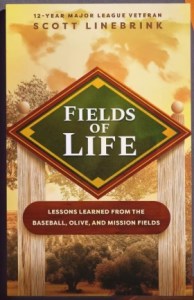 Linebrink has spent the last five years reflecting on the end of his career, and what has happened in his life since, while writing a memoir, “Fields of Life, Lessons Learned From the Baseball, Olive and Mission Fields,” which will be published next month.
“There’s a story being written in everyone’s life,” Linebrink said. “If you’re willing to take a few roundabout paths or say yes to something you never thought you would say yes to, it can bring some really exciting stuff. Just be open to that and realize that new experiences can bring about a lot of learning and growth in your life.”
Discovering a purpose and an identity
Once he got back home to Texas after his release by the Cardinals, Linebrink was unsure of what he wanted to do other than pour into his wife Kelly and their two young daughters. Linebrink knew he wanted to finish his college degree. That was about the time a book came across his desk, “Every Good Endeavor,” by Tim Keller.
“It really helped me frame the next chapter of my life,” he said. “It helped me discover my purpose, my identity.”
So too did a trip he and Kelly took to Israel in September of 2012, joining some friends who had already planned the journey before Linebrink knew he would be out of baseball.
Seeing fields of olive trees gave Linebrink an idea. He had a friend who had planted some of the trees back in Texas. “What if I did that?” he asked himself. “I decided to go for it.”
At its peak Linebrink had 8,000 olive trees planted on 13 acres on his farm in Georgetown, Texas, some growing as high as 12 feet tall. They harvested the fruit and pressed it to make oil.
“It was a really cool way for me to find a place where I could just experience some peace and find a place to reflect,” Linebrink said. “I still do that. I can get on my tractor, go out there and clear my head and think.”
After a successful harvest in 2020, a hard freeze forced Linebrink to cut the trees back to the ground, but they are now growing again.
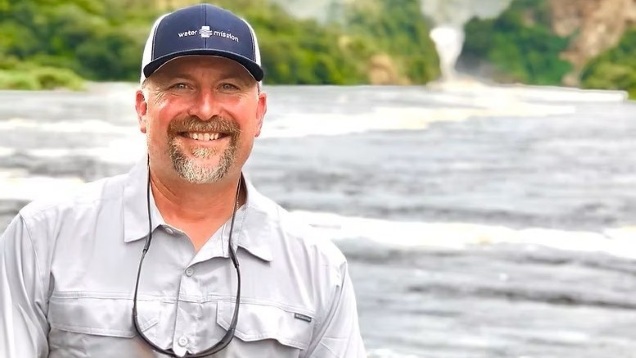
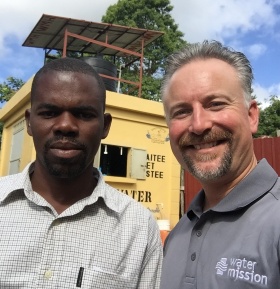
At the same time he was growing the olive trees, Linebrink spent 10 years working for Water Mission International, a non-profit charity that “builds sustainable safe water solutions for people in developing countries, refugee camps and disaster areas,” according to its website.
“It’s kind of interesting how it all fits together,” Linebrink said. “Baseball player to olive farmer to global mission advocate. Each step prepared me for the next.”
 Linebrink’s book is divided into nine chapters, which “follow the agricultural year and the arc of a career: Timing, Preparation, Stress, Weeds, Roots, Patience, Harvest, Oil, and Rest.” The book takes readers to a major league bullpen, a field of weeds and rocks in Texas, to a refugee settlement in Uganda, to a broken well in the Masai Mara, a national reserve in Kenya, and to a gazebo in an olive grove.
“It’s not really about baseball,” Linebrink says about his book on his website, scottlinebrink.com. “It is about what a man learns when the thing that measured him is taken away, and about a crop that takes years to bear anything and does its most important work underground.”
Linebrink also got involved in Pro Athletes Outreach, an organization which aims to “unite a community of pro athletes and couples to grow as disciples of Jesus, and positively impact their sphere of influence.”
Linebrink is also the host of a regular podcast on the Sports Spectrum platform.
In all of the ventures that he has undertaken, including the new book, Linebrink has tried to use his experiences to help others, whether they are professional athletes or not.
“It’s been quite a ride,” he said. “I’m super grateful. I’ve kind of gone from the harshness and bitterness toward baseball. Now I have nothing but good memories. I see how that set me up for the next chapter of my life.
“The relationships, things that I learned about myself, what discipline and drive taught me. All of it makes sense now … Sometimes we don’t know which way we are going but we have to just roll up our sleeves and get to work.”
Follow Rob Rains on X @RobRains
To reserve a copy of Linebrink’s book, Fields of Life, before it is published on Nov. 10, CLICK HERE. His website is: scottlinebrink.com
Photos courtesy of Scott Linebrink and by The Associated Press